Business Model & Value Proposition workshop
A facilitated workshop for startups, entrepreneurs, and businesses repositioning their offer, to clarify customer value and design a business model that can scale.
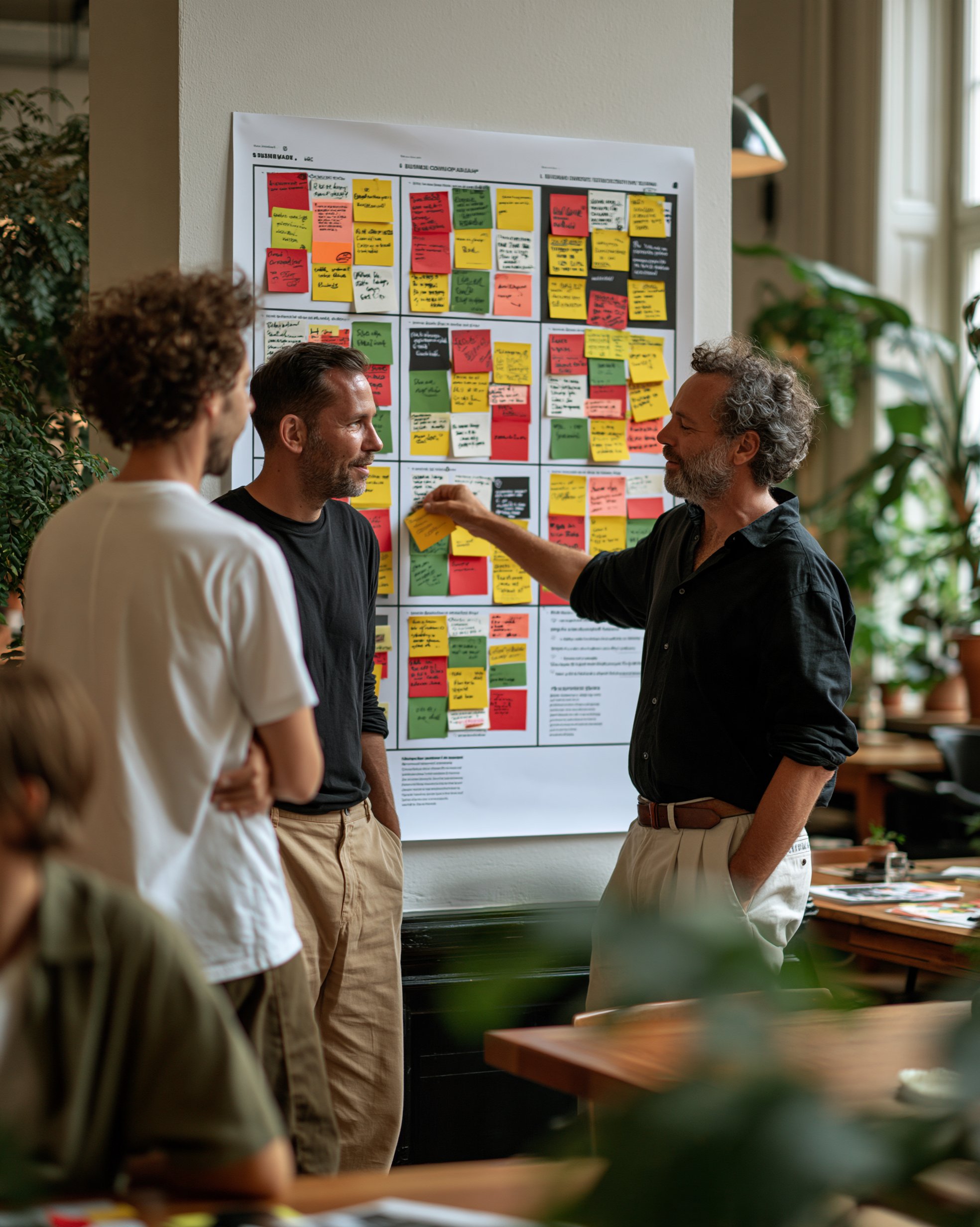
01
Startups, entrepreneurs, and businesses repositioning their offerings.
02
One day in person or a three-week online programme, tailored to your stage and question.
03
Business Model Canvas, Value Proposition Design, and Customer Insights Mapping.
04
In person or online for teams, organisations, institutions, and leadership groups.
The challenge
Many offers are built around what a team can do rather than what customers need and will pay for. Assumptions about segments, value, and revenue stay untested until the market tests them for you. This workshop makes those assumptions explicit and connects customer value to a business model you can test and refine.
✓
A structured process to clarify customer value, design the business model, and identify the assumptions to test.
×
Not a finished business plan, a market research study, or a guarantee of product-market fit.
Why it works
01
The offer is designed around what customers are trying to get done, not around internal assumptions.
02
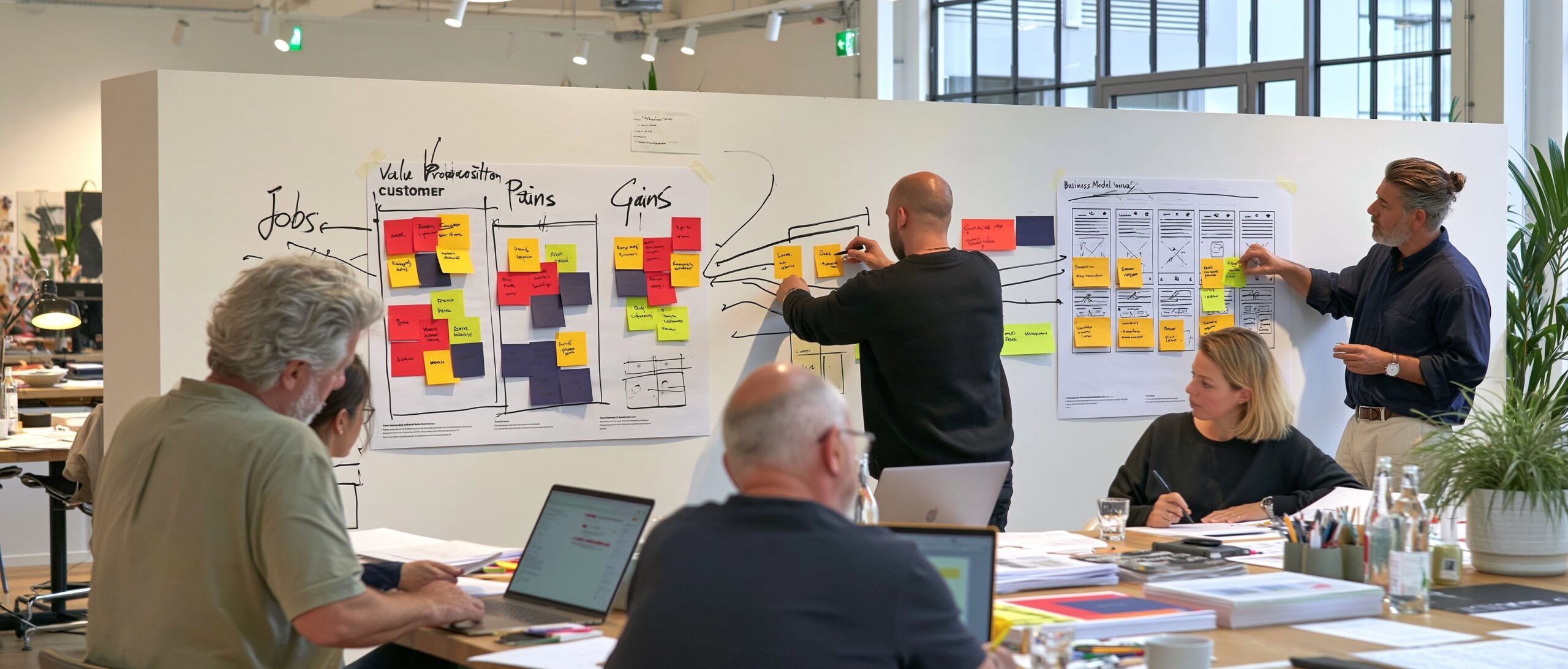
The Business Model Canvas puts value, channels, revenue, and costs on one page everyone can question.
03
Matching pains and gains to your offer shows where value is strong and where it is still weak.
04
Every critical assumption becomes something you can test, not something you hope is true.
Process
01
We clarify the offer, the market question, and the decision the workshop must support.
02
Customer segments are mapped through their jobs, pains, and gains.
03
The value proposition is shaped to fit what matters most to those customers.
04
The business model is built across value, channels, relationships, revenue, and costs.
05
Critical assumptions about customers, pricing, and revenue are identified and ranked.
06
The riskiest assumptions become small experiments with owners and next steps.
In practice
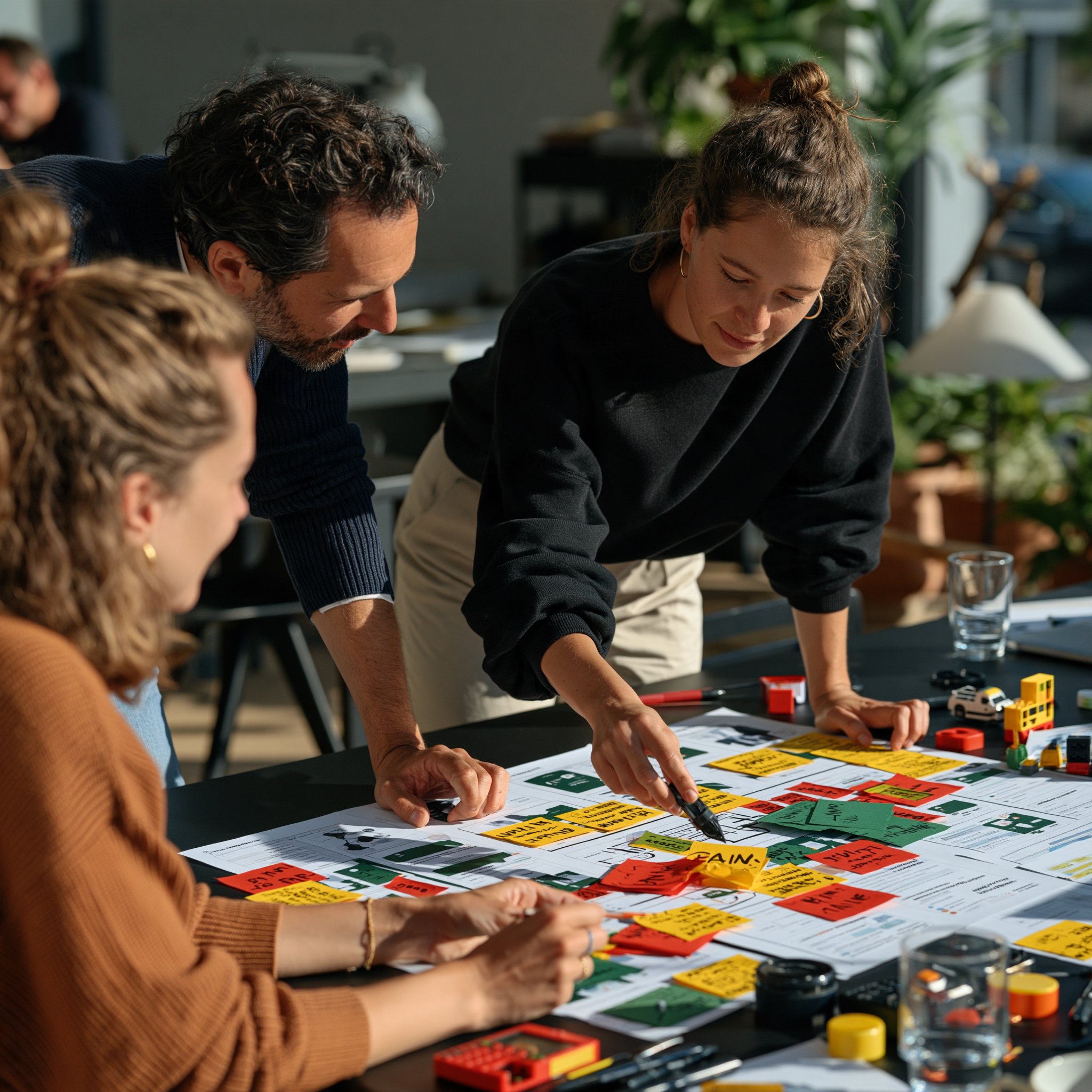
Building the model
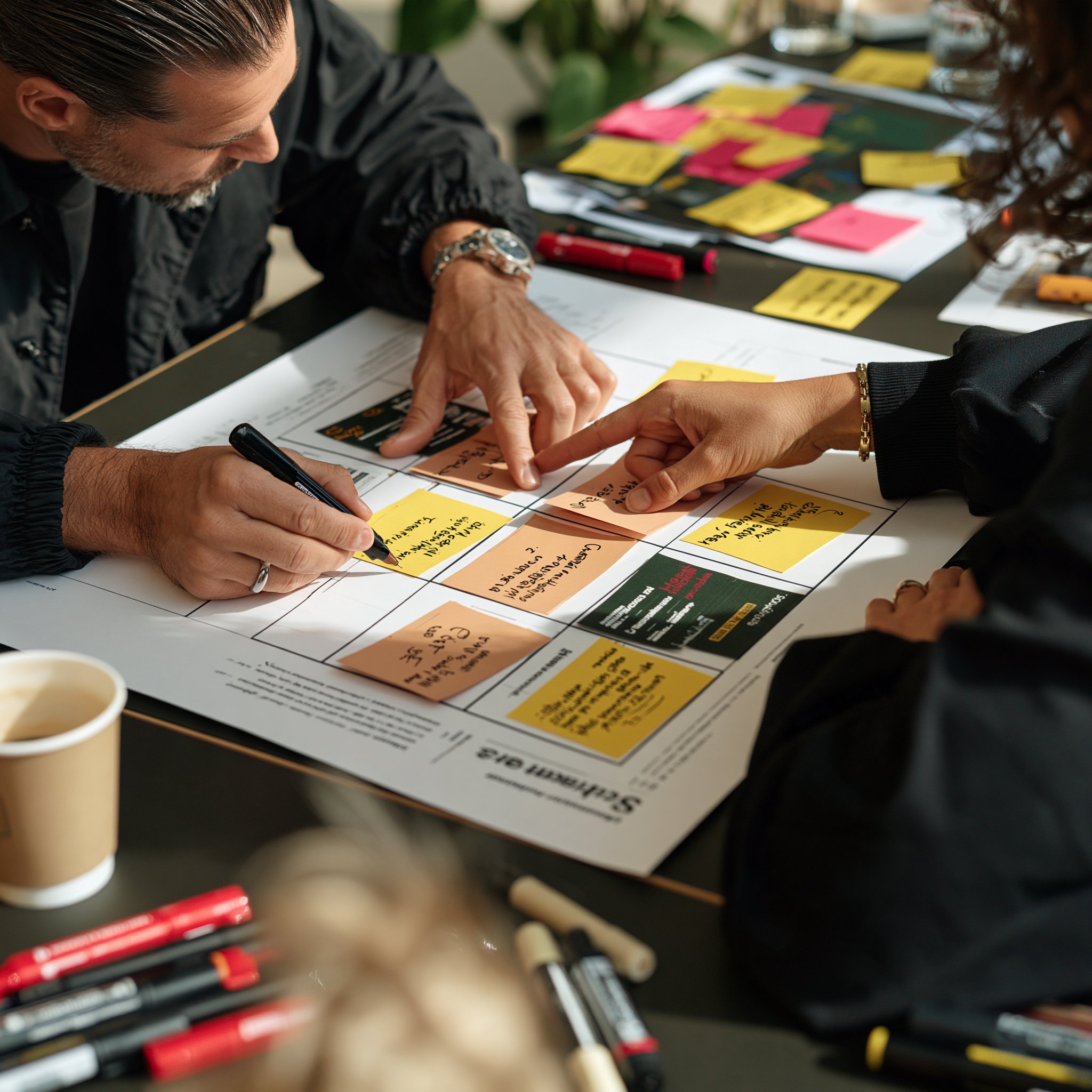
Customer value on the table
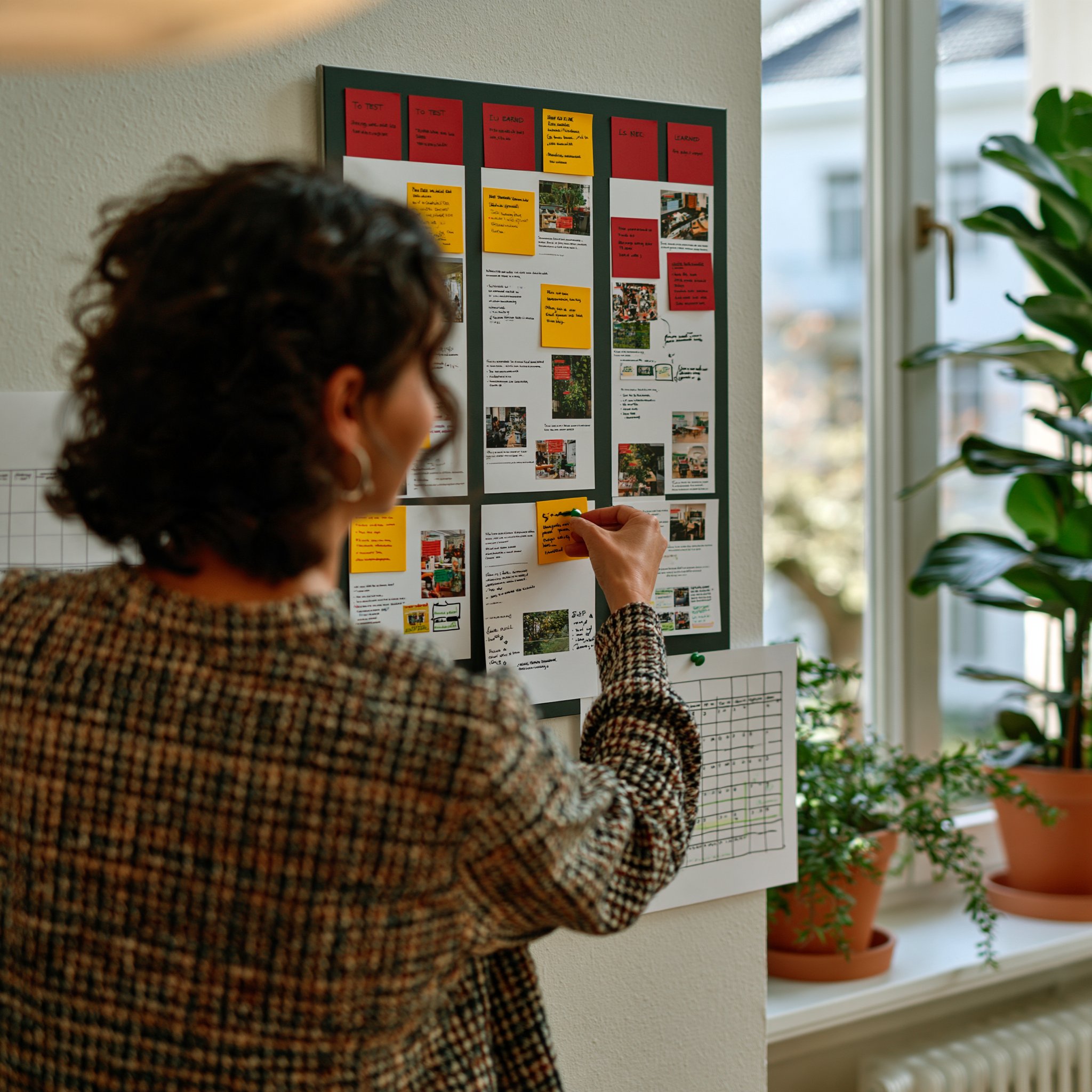
Testing the assumptions
Outcomes
01
A sharper view of who you serve first and what they are trying to achieve.
02
An offer that addresses the pains and gains that matter most to those customers.
03
A complete, shared model of how you create, deliver, and capture value.
04
A first view of pricing logic, revenue streams, and the costs that drive them.
05
A ranked list of the assumptions that could make or break the model.
06
Small, practical tests with owners and dates to validate the riskiest assumptions.

Facilitated by
I’m Christian Vernaschi, founder of From Ideas to Impact. I combine more than 20 years in creative strategy with facilitation, Design Thinking, brand strategy, and leadership development. My work focuses on helping teams move from vague alignment to visible decisions they can actually act on.
Christian Vernaschi, Trained Certified Facilitator of LEGO® SERIOUS PLAY® method and materials
FAQ
Founders and the people who shape the offer: typically leadership, product, sales, and marketing. We agree the participant list during preparation.
The workshop works for a new idea that needs a model and for an existing business repositioning its offer. Preparation helps us pitch the session at the right level.
Only when it fits. The core tools are the Business Model Canvas and Value Proposition Design; LEGO® SERIOUS PLAY® can be added to explore identity, positioning, or customer experience.
Yes. The in-person version typically runs over one day; the online version is spread over about three weeks of shorter sessions.
You receive the canvases and a summary of assumptions and experiments. A follow-up session can be added to review test results and refine the model.
No. You leave with a clear, testable model and a plan to validate it. A business plan is stronger when it is built on tested assumptions.
When customer value, revenue, and costs sit on one page, weak spots become visible. That is when a business idea stops being a hope and starts becoming a model.
Articles
19/10/2026
Every assumption gets tested eventually. Most organisations only own the expensive version: build it, launch it, find out. The cheap version is
Read more
19/10/2026
Ask a student to explain their concept and they describe it. Ask them to explain the metaphor they chose and they often
Read more
18/09/2026
Every assumption gets tested eventually. Most organisations only own the expensive version: build it, launch it, find out. The cheap version is
Read more