There is a specific moment in facilitation work where decision making in organizations appears to be working perfectly.
It is not the moment where disagreement surfaces. It is not the moment where someone asks a question nobody has an answer to. It is the moment where everything appears to be working.
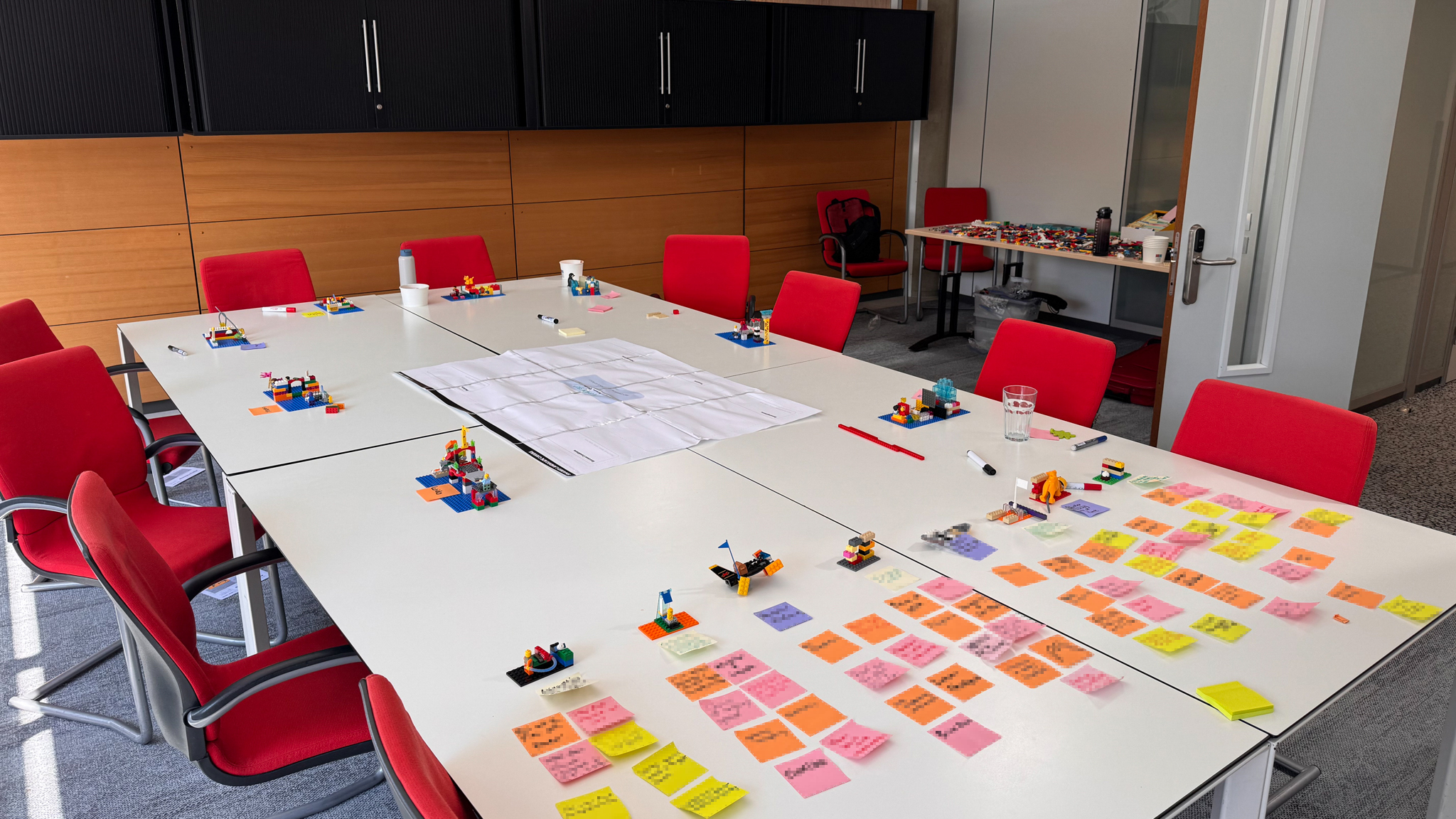
Last week, that moment happened again. The brief was clear, the teams were engaged, the tools were applied correctly. From the outside, nothing was wrong. And yet, by the end of the session, each team had walked away with a slightly different understanding of the same problem. Not different enough to trigger a dispute. Just different enough to guarantee that what came next would diverge.
That is the moment most facilitation work misses entirely, because it does not look like a problem.
What consensus actually is
When teams reach apparent agreement, there is a strong tendency to treat that agreement as stable, as if something has been resolved. What has usually happened is more fragile: parallel interpretations have arrived at the same surface conclusion, without ever actually converging.
This matters because what we tend to call decision making in organizations is rarely a single moment. It is a sequence. A decision passes through teams, functions, contexts, and time. At each step, it is translated to fit local priorities, compressed to meet constraints, and, wherever evidence is missing, quietly supplemented by assumptions. None of these adjustments is particularly dramatic in isolation. Together, they change the meaning of what was originally agreed.
Most organizations respond to execution failures by diagnosing communication. More meetings get scheduled. More clarity gets requested. More alignment processes get built. The diagnosis feels reasonable because it addresses what is visible. What it leaves untouched is the fact that the decision had already started to change before any of those interventions were needed.
This connects directly to why AI decision systems fail when the surrounding environment is unclear: the tool is rarely the problem. The conditions around the thinking are.

Where assumptions separate from evidence
Back in the room, something shifted in one team.
Two participants stopped treating the brief as something to structure and started treating it as something to test. Their questions were no longer aimed at clarifying what had been said. They were aimed at probing the assumptions underneath it, applying pressure to statements until those statements either held or revealed their limits.
At a certain point, they stepped away from the tools entirely and physically acted out the customer journey. What began as a simple exercise became a method for simulating the experience under pressure, surfacing inconsistencies that had not been visible in any of the maps.
What had seemed stable started to unravel. Assumptions became explicit. Gaps became visible. The team transitioned from working with answers to working with uncertainty. It was a smaller, messier, more productive conversation than anything happening at the other tables.
This is the moment where assumptions begin to separate from evidence. It is also the moment most teams move past too quickly, because it is uncomfortable to sit in uncertainty when tools and structure make it possible to keep moving.
This is also the same dynamic behind why innovation fails when teams cannot think together. The limiting factor is not ideas. It is the absence of a shared process for distinguishing between what is known, what is assumed, and what still needs to be verified.
Decision drift
Even when assumptions are surfaced and tested, a second problem takes over. Decisions that appear grounded in evidence do not necessarily stay stable.
This is what I refer to as decision drift: the gradual transformation of a decision’s meaning as it moves through an organization, driven by interpretation, constraints, and the assumptions that fill the gaps where evidence runs out.
As decisions move, they are translated to fit local contexts, compressed under constraints, and, where evidence is missing, supplemented by assumptions. This is what makes decision making in organizations inherently unstable, not because decisions are wrong, but because they change as they move.
Research describes cross-cutting decisions as something closer to a series of decisions made over time by different groups, rather than single fixed points. That distinction matters here, because decision drift does not happen in the room where agreement is reached. It happens as the decision moves.
Each handoff introduces a slightly different interpretation. Each translation to a new context carries a slightly different frame. These shifts are small enough to go unnoticed in real time, yet they accumulate. By the time a decision reaches execution, it is not the same decision that left the room. It is a version of it, shaped by the path it has taken.
In practice, decision drift does not appear as error. It appears as friction. Teams use the same language while meaning different things. Priorities shift without explicit decisions being made. Execution feels locally coherent while remaining globally misaligned.
Nothing appears to be wrong. And yet, something no longer holds.
This is also why agility degrades as organizations grow. The system still moves, but the meaning no longer travels cleanly with it.

Why alignment is not the solution
Most organizations respond to decision drift by reinforcing alignment. The assumption is that a better shared understanding will hold things together. It will not, because alignment is anchored to a specific moment, and decisions unfold continuously across contexts.
What is agreed in one setting does not remain fixed. It begins to shift as soon as it moves into a different one. Without a structure that stabilizes how meaning is interpreted and transferred across those contexts, alignment dissolves progressively as decisions travel.
HBR’s work on decision roles reinforces this point directly: unclear decision rights create bottlenecks and weaken execution not because people lack intelligence, but because the organization has not clarified how decisions should move or who carries them forward. Ownership ambiguity is not an interpersonal problem. It is a structural one.
What is often described as a communication issue is, in most cases, the absence of a system that preserves meaning as decisions move through it.
This also connects to a broader pattern explored in Team culture vs leadership: culture does not live in leadership statements. It lives in how teams interpret, translate, and enact meaning in everyday work. A decision that drifts in execution is not a failure of intent. It is a failure of design.
What to look for instead
The most informative moment in any major initiative is not the decision itself. It is what comes immediately after.
Where does meaning start to shift? Where do assumptions quietly replace evidence? Where does ownership become just unclear enough to allow interpretation to fill the gaps? These moments rarely present themselves as problems. They appear as normal progress, which is precisely why they remain unchallenged.
If you look at your last major initiative through that lens, the question is not whether those moments exist. They always do. The question is whether your system is designed to make them visible before they accumulate.