It looks like movement. It feels responsible. And yet, very little actually changes.
Over the past years, I have seen organisations invest heavily in rules, processes, and structures meant to future-proof their work. Flexibility policies. Learning strategies. Culture decks. AI guidelines. ESG roadmaps.
The intention is usually good.
The impact, less so.
Because adaptability does not come from documents. It comes from how people think, decide, and interact when conditions shift.
The real shift is not technological.
It is behavioural.
As we move into another year shaped by uncertainty, talent pressure, and accelerating technology, one pattern keeps repeating itself. Organisations try to manage change with static tools.
Work is becoming more fluid. Roles are evolving. AI is entering daily decision-making. Expectations around meaning and autonomy are rising. Still, many leadership teams respond by adding layers of policy, clarification, and control.
That instinct is understandable. Structure feels safe.
But adaptability cannot be mandated. It has to be practiced.
And that practice comes with a cost most organisations underestimate.
Managing people versus designing conditions
The first asks: Do people follow the rules?
The second asks: Can people think, decide, and adjust together when the rules no longer apply?
Adaptive cultures are not free-for-all environments. They still have boundaries. But those boundaries are supported by shared understanding rather than constant enforcement.
The risk is this: Designing conditions means leaders lose some immediate control. Decisions take longer at first. Disagreement becomes visible. Silence can no longer hide behind hierarchy.
Many organisations say they want adaptability. Fewer are willing to tolerate the temporary discomfort it requires.
In practice, this means investing less energy in prescribing behaviour and more energy in shaping the moments where behaviour is formed.
Culture is shaped in interaction, not intention
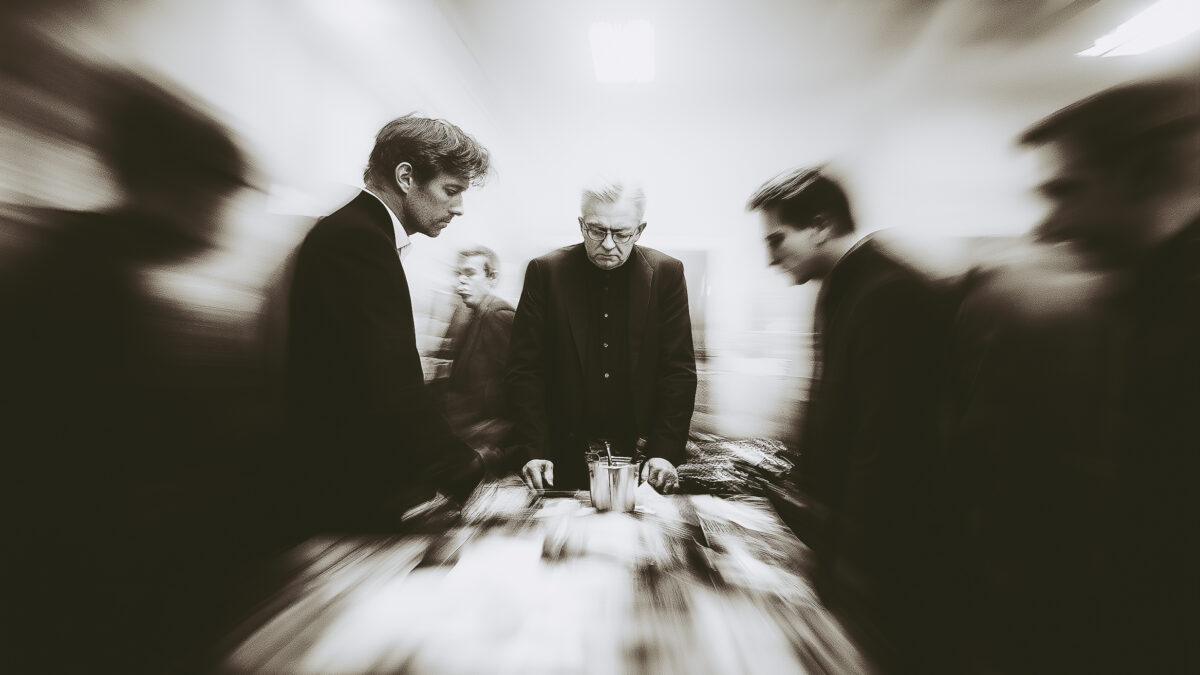
One of the most persistent misconceptions I encounter is the idea that culture is defined by values statements or leadership communication. In reality, research on organisational behaviour consistently shows that culture is shaped by everyday leadership behaviours and interactions, not by what organisations declare, but by what they repeatedly do under pressure.
In reality, culture shows up in very small moments.
How a team reacts when priorities conflict.
Who speaks when decisions become uncomfortable.
Whether questions are welcomed or quietly discouraged.
How uncertainty is handled in the room.
I recently worked with a leadership team that had spent months refining their ways of working. On paper, the model was progressive and flexible. In conversation, something else became visible.
The moment ambiguity entered the room, the group consistently deferred to the most senior voice. Not because they were instructed to, but because they had never practiced another way.
No policy could fix that.
A different kind of conversation could.
Through facilitated sessions, the team slowed decisions down on purpose. They surfaced assumptions, tested alternative decision patterns in real time, and made those patterns explicit.
Not as rules.
As shared agreements.
That is where adaptability started to take shape.
Why facilitation matters more than ever
Facilitation is often dismissed as a soft skill or a workshop add-on. In reality, it is becoming a core leadership capability.
When work is stable, direction can be handed down.
When work is volatile, direction has to be co-created.
Facilitation matters most in the moments leaders usually try to move past quickly. When a strategy stalls. When teams disagree under time pressure. When decisions must be made with incomplete information.
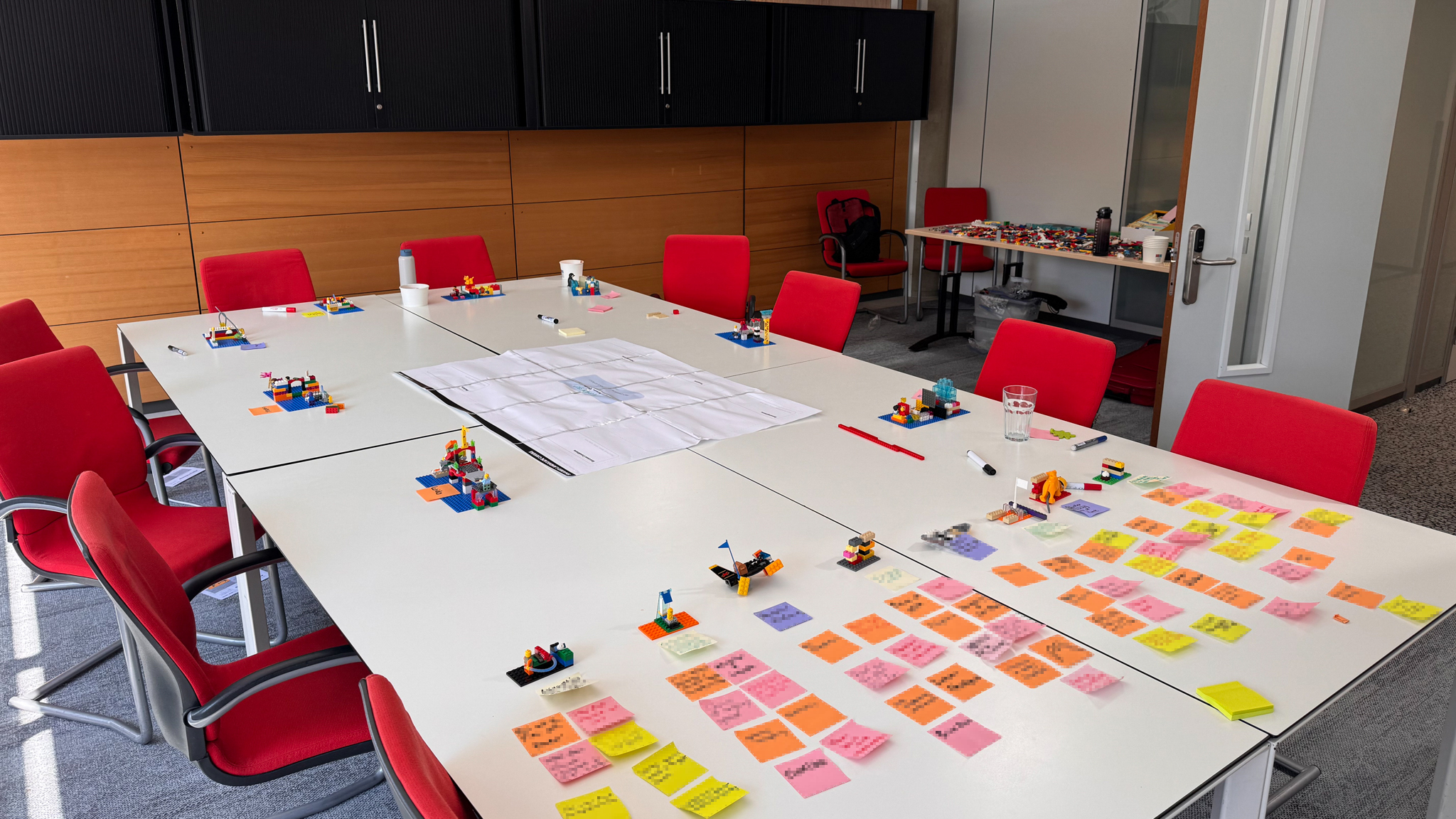
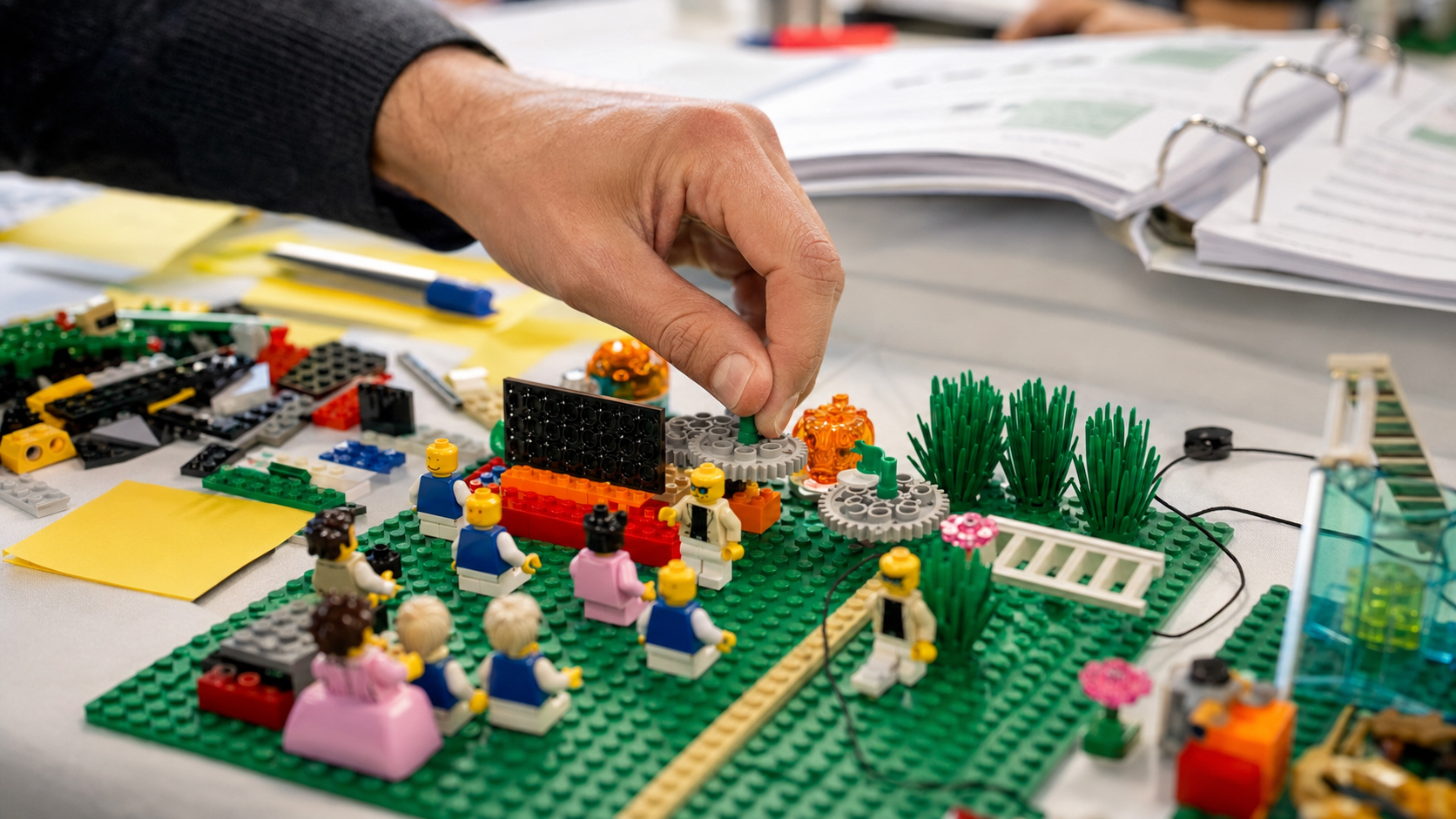
Structured facilitation, whether through design thinking, visualisation, or hands-on methods like LEGO® SeriousPlay®, creates conditions where teams can think together before defaulting to authority or habit.
This is not about creativity for its own sake.
It is about building the capacity to adapt together.
For SMEs, NGOs, and mission-driven organisations, this matters deeply. Resources are limited. Roles overlap. Decisions carry weight. The ability to align under pressure becomes a strategic advantage.

Three questions worth starting the year with
Instead of adding another initiative to the list, I often invite leadership teams to pause and reflect on a few simple questions:
Where do our people hesitate when things become unclear?
Not in theory, but in real situations. What patterns show up under pressure?What conversations are we avoiding because they feel uncomfortable or inefficient?
These are often the conversations that unlock adaptability.Are we designing time and space for thinking together, or only for executing faster?
Speed without sense-making creates motion, not progress.
These questions do not require a new policy.
They require attention, intention, and a willingness to engage differently.
A different way to start the year
If there is one invitation worth holding at the start of this year, it is this:
Resist the urge to fix complexity with more structure.
Instead, pay attention to what your organisation is already teaching people through everyday interactions. Who gets heard. Who decides. What happens when no one is sure.
An adaptive organizational culture is revealed not by what is written down, but by how people act when pressure removes certainty.
Adaptive cultures are not built by accident.
They are designed, one interaction at a time.
And the uncomfortable truth is this:
If the way your teams behave under pressure does not match your intentions, no new policy will save you.